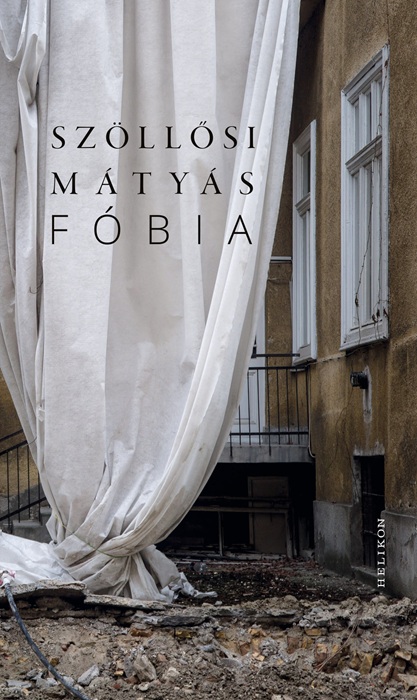
Phobia – second book / Fóbia – második könyv
“He captures the atmosphere of the first days of the epidemic with the same power as Albert Camus’ novel The Plague,” wrote one of his critics about the first book of Phobia. The second book deepens this journey, both physically and spiritually. The story, told from the perspective of the physicist, painfully depicts the course of the disease, then a funeral and the subsequent meeting, where family members gather to remember, and where reality and unreality, dreams and visions, meet: we find ourselves in a thicket of lies, assumptions, distortions, confusingly, since we cannot know what to believe and what not.
In his second book of Phobia Mátyás Szöllősi not only reveals the deepest layers of the uncertainty caused by the epidemic situation and the transformation of the world to readers from a very personal perspective, but also discusses serious social situations and questions that define European societies to this day and, in some cases, poison people’s lives. Power and its retention, manipulation and silence all play a really important role in the second book of the novel, as do the kinds of habits that spiritually prevent most of the characters from breaking out of an abusive or simply humiliating situation. Generational gaps, faith, and spirituality are also important, which often takes on a visionary, magical character when new bizarre stories that significantly affect families and the community as a whole come to light. And most of the characters, like Emilia’s work as a physicist, are dominated and defined by duality, seemingly completely contradictory things and situations, and unraveling them is one of the biggest stakes of the story. However, the volume is not only about these bizarre dualities and contradictions, but also about the period after the pandemic, about liberation, which is both a collective and personal catharsis. Emilia’s relationship trauma over time casts a heavy shadow on this sudden freedom, which can only be maintained and become a true reality if she faces not only what happened to her, the grievances she has suffered, but also her own actions, sins and mistakes, which gain their true meaning and essence in a final, suggestive monologue. The second book of Phobia is the strongest, most expressive work by Mátyás Szöllősi, who writes book after book, building on instinct, about faith and doubt, the power of fortuitousness. He penetrates the depths of the soul, whether it is about family or relationship traumas, serious illness, a suspected or real suicide attempt, or self-examination.
Helikon Publisher, Budapest, 2026
Interview in Hungarian: https://shorturl.at/fonbZ